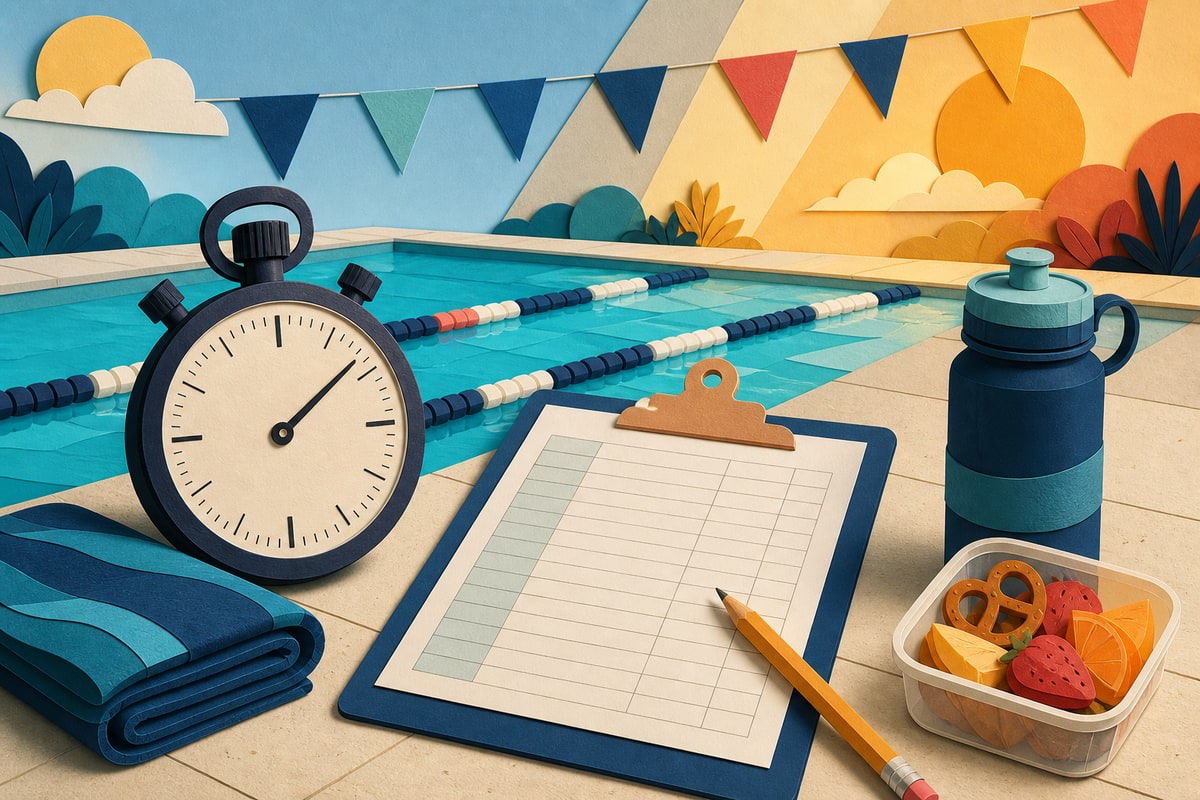
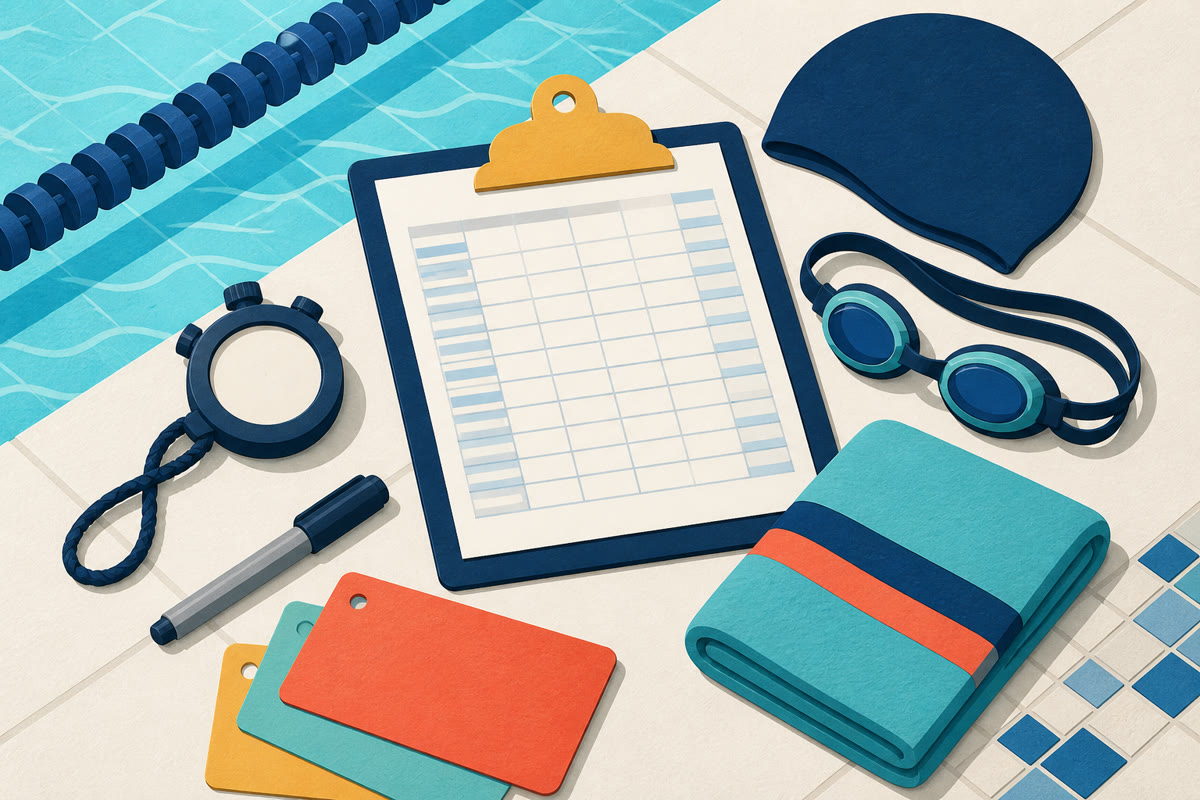
A first swim meet feels confusing because several simple systems happen at once: entries, sessions, warm-up, check-in, heats, lanes, timers, and coach instructions. Once you know the sequence, the day becomes much more manageable.
Before meet day
Read the meet information and team message—not just the date and pool address. Confirm:
- which session the swimmer is entered in;
- facility arrival and warm-up times;
- events and any entry limits;
- positive check-in requirements;
- parking, seating, deck-access, and credential rules;
- team arrival expectations;
- what the host says about food, chairs, and volunteers.
Use the meet packing checklist the night before. The meet-length guide explains how to turn arrival, warm-up, events, relays, and volunteer work into a realistic family time window. Write the event numbers and key terms in one place.
Arrive and find the team
“Warm-up starts at 7:00” does not mean “walk through the door at 7:00.” Allow time for parking, facility entry, finding the team area, changing, and checking in with the coach.
The swimmer should locate the coach or team meeting point before wandering the facility. Parents should learn where spectators belong; many meets limit deck access to athletes, coaches, officials, timers, and credentialed volunteers.
Understand entries, heats, and lanes
An event is a particular race, such as the 100-yard freestyle. When more swimmers are entered than the pool has lanes, the event is divided into heats. Each swimmer is assigned a heat and lane.
Those assignments may appear in a heat sheet, an app, posted pages, or the ready area. The heat-sheet guide shows how to find them without confusing an entry time with a result. Put the current assignments on the free Meet-Day Organizer instead of relying on several screenshots.
Warm-up
Warm-up is organized, not free swim. Follow the coach and posted lane instructions. Pools often have separate procedures for general swimming, pace work, one-way starts, and turns.
The swimmer should use warm-up to:
- learn the walls, flags, gutters, and backstroke count;
- check goggles and cap;
- feel the water and loosen up;
- practice starts only where and when allowed;
- listen for schedule changes.
Before each race
The swimmer should speak with the coach at the time the team expects—often before and after each race. Then confirm the event, heat, lane, and where to report.
At some meets, younger swimmers use a bullpen or ready area. At others, swimmers report directly behind the blocks. Do not assume the procedure from a different pool applies.
Bring proven competition goggles and a spare cap. New gear, unfamiliar straps, and last-minute suit changes add avoidable stress.
Behind the blocks
Listen to the timers and officials. Stay behind the assigned lane without blocking the prior heat. When the preceding swimmers finish, follow instructions about entering the area and preparing.
Officials control the start. Spectators and teammates should be quiet once the referee signals the field to prepare.
After the race
The swimmer should exit as directed, retrieve personal gear, and check in with the coach. The best immediate conversation is short and specific: what happened, what the swimmer noticed, and one useful next step.
A race result is information, not a verdict on the swimmer. Good meet behavior includes congratulating others, treating volunteers respectfully, and not throwing gear after a disappointing swim.
Parent job description
Parents help most by handling logistics and emotional steadiness:
- know the session and parking plan;
- keep food, layers, and a dry towel available;
- avoid technical coaching that conflicts with the coach;
- volunteer when required;
- celebrate effort, skills, and learning—not only time drops.
If a result or disqualification is unclear, use the team’s process. Do not confront an official on deck.
Leaving the meet
Check with the coach before leaving. A relay, team responsibility, or event change may still be pending. Pack out personal items and trash, and verify that both goggles and team gear made it back into the swim bag.
Bottom line
Know the sequence: read, arrive, find the team, warm up, locate the heat and lane, talk to the coach, race, recover, and check out before leaving. The first meet does not need to be perfect. It needs to make the second one easier.
A note from Nikki
What I looked at
I organized common meet-day procedures into one sequence and checked the rules and terminology against current USA Swimming resources.
What can vary
Meet procedures vary by host, facility, age group, and governing body. The meet announcement, team communication, coach, and officials override this general sequence.