The best competition goggles are the pair that seal on your face, stay stable off the blocks, and let you see the wall without becoming the main thing you notice during a race. There is no model that fits every swimmer.
Quick answer
Start with a gentle press test: place the eyecups against a dry face without the strap. A brief, comfortable seal is a promising first sign. Then adjust the nose bridge, swim fast, dive, turn, and push off before trusting the pair at a meet.
| Need | Look for | Tradeoff |
|---|---|---|
| Sprint racing | Low profile, stable dual strap, secure nose bridge | Less comfort over long sessions |
| One pair for training and meets | Moderate gasket, replaceable nose pieces, common tint | Not the absolute lowest profile |
| Outdoor racing | Mirrored or darker lens with usable peripheral vision | Can feel too dark indoors |
| Indoor racing | Clear, blue, or light-smoke lens | Can be bright outdoors |
| Vision correction | Optical strengths and a secure racing shape | Fewer shapes and tints |
Fit beats the ranking
A race goggle should sit evenly around both eyes without needing extreme strap tension. Too narrow, and it can pinch the nose or pull at the corners. Too wide, and the seal may break when the swimmer dives or turns.
Interchangeable nose bridges matter because they change the relationship between the two eyecups. Arena’s Cobra family, for example, emphasizes a compact fit, dual straps, interchangeable bridges, and semi-rigid side elements. Those are useful design facts—but they still do not prove the goggle fits a particular face.
Swimmers who already know that a Vanquisher-style gasket seals well may get more value from that familiar shape than from moving to a premium model just before a major meet.
Models worth comparing
Arena Cobra Ultra Swipe
The Cobra Ultra Swipe family is a serious low-profile option with dual straps, interchangeable nose bridges, and a manufacturer-described anti-fog coating that can be reactivated according to Arena’s instructions.
Best for: experienced competitors who prefer a tight socket fit and want a stable racing frame.
Watch for: eyelash clearance, pressure around the eye socket, indoor lens darkness, and exact Cobra version.
Speedo Speed Socket 2.0
The Speed Socket line sits in the middle: compact enough for racing, familiar to many competitive swimmers, and less extreme than some blade-shaped goggles.
Best for: swimmers who want one low-profile pair for fast practice and meets.
Watch for: lens tint, bridge fit, and whether the exact listing is the model and size expected.
Speedo Vanquisher family
Vanquisher goggles are a common first choice for age-group, high-school, and masters swimmers. Their broad use does not make them universally best; it makes the fit easy to recognize and replace.
Best for: first race goggles, backup pairs, and swimmers who already know the gasket fits.
Watch for: youth versus adult sizing, clear versus mirrored lenses, and version changes.
Choose the lens for the pool
Mirrored does not automatically mean faster. It changes how much light reaches the eye.
- Use clear or light-colored lenses in dim indoor pools.
- Use smoke or mirrored lenses outdoors or in bright natatoriums.
- Avoid making an unfamiliar, very dark lens your only option.
- Pack a second tint when conditions are uncertain.
If a swimmer needs correction, the prescription-goggle guide explains off-the-shelf diopters and the limits of optical goggles.
Race-day test
- Adjust the bridge before tightening the strap.
- Swim a normal warm-up and check for pressure.
- Practice a racing start; a lap-swimming seal is not enough.
- Push hard through turns and breakouts.
- Confirm the lens works in the meet’s lighting.
- Pack a proven backup in the meet bag.
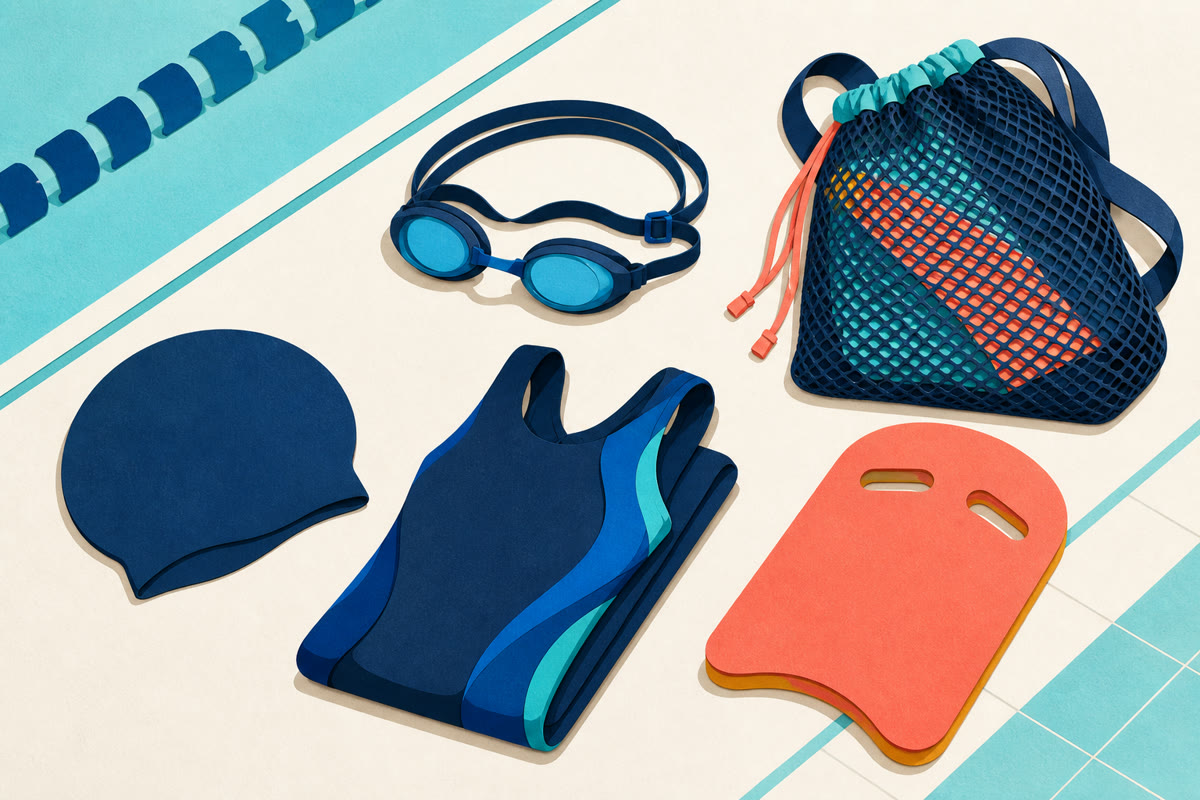
Do not debut a new pair in a championship final. Learn how to clean and defog goggles without damaging the coating, and keep them in a case inside a swim bag that separates wet gear.
Bottom line
Choose the seal first, the race profile second, and the lens third. A secure familiar goggle usually beats a prestigious pair that leaks. For a new competitor, pair this decision with the first swim meet guide so the rest of race day feels just as predictable.
A note from Nikki
What I looked at
I compared seals, nose bridges, lenses, and profiles using manufacturer details and the demands of starts, turns, and race-day lighting. A secure, familiar pair matters more than a brand ranking.
What can vary
I have not personally tested every goggle listed. Face shape determines fit and product versions change, so verify the current model and return policy.