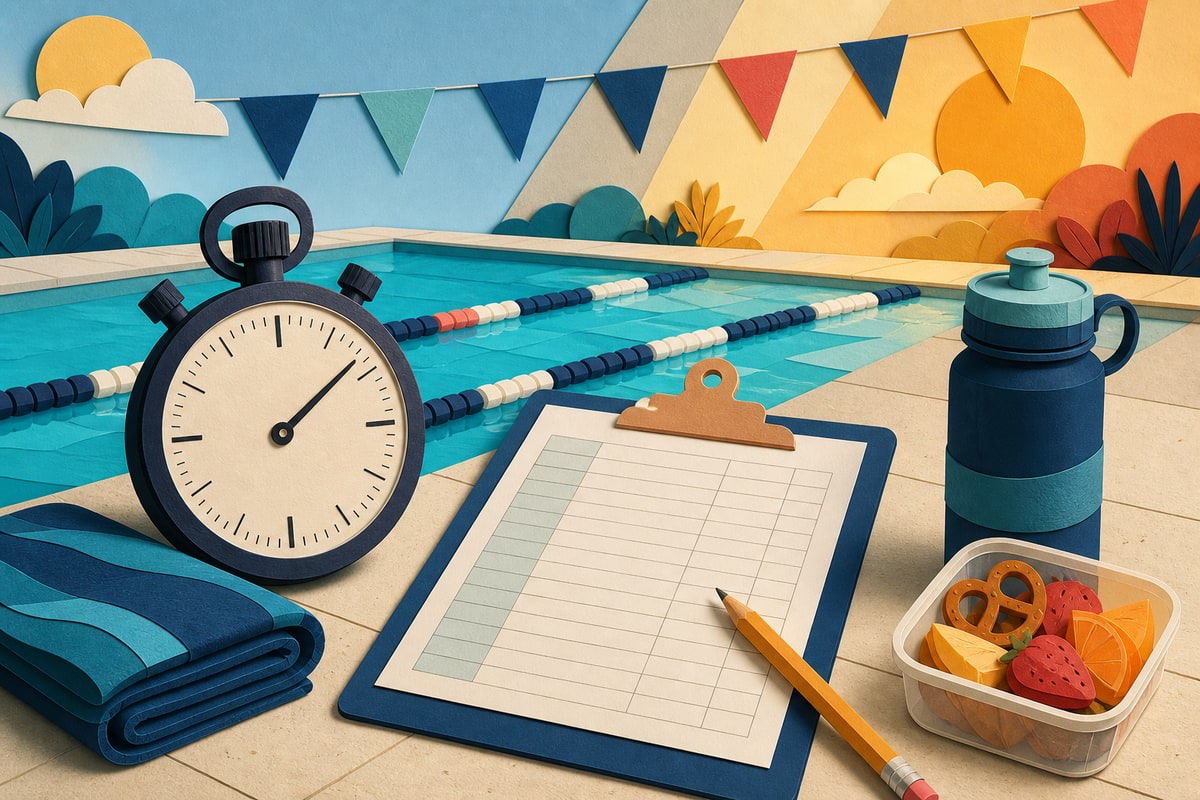
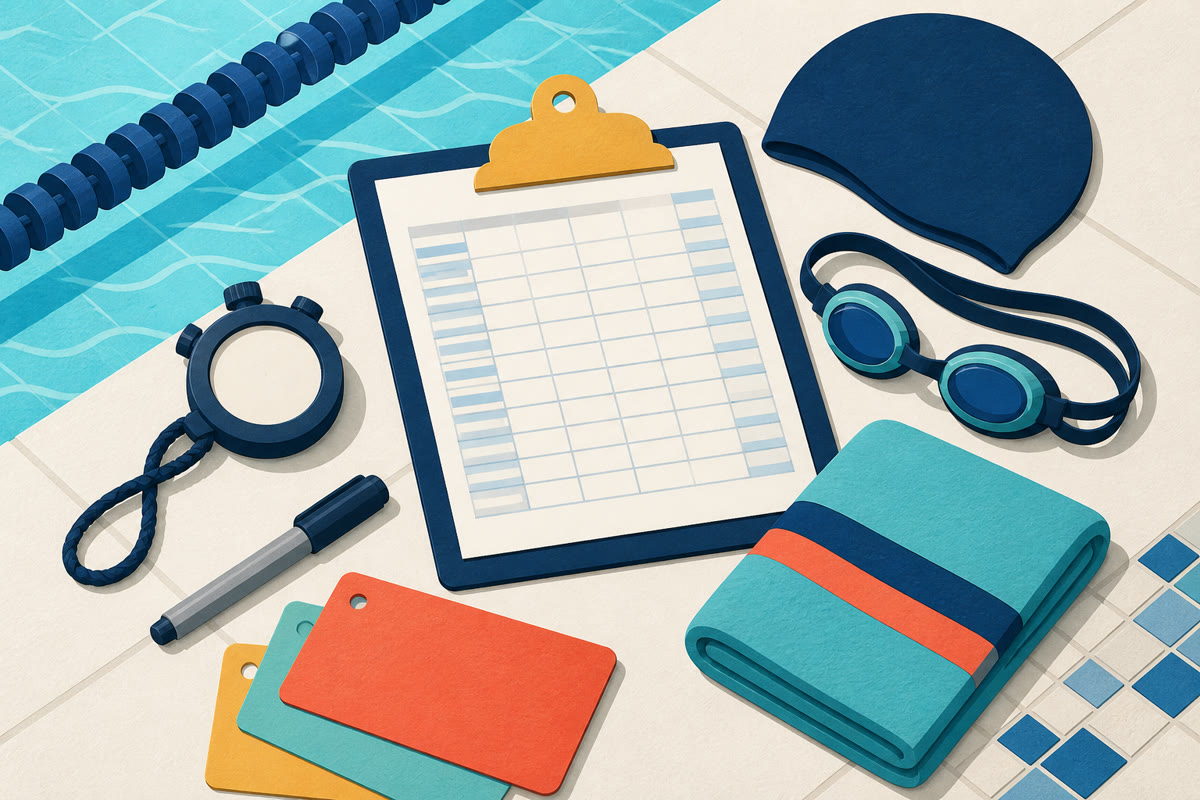
Pack a swim meet in layers: race essentials first, backups second, warmth and recovery third, then facility-specific extras. The list below is designed to print cleanly.
Start with the free Meet-Day Organizer. Put arrival time, events, relays, and your volunteer shift in one place, then use this checklist to pack. Recheck the official meet information for changes.
Pack for your actual session
| Meet plan | What to add to the essentials |
|---|---|
| One short indoor session | Familiar snack, warm dry layer, and a bag for wet gear |
| Long outdoor session | Sun protection, extra water, dry layers, and permitted shade or seating |
| Prelims and finals | A separate dry towel and clothes for the later session, a meal plan, and a place to dry wet gear |
| Swimmer plus parent volunteering | Separate swimmer and spectator supplies, shift details, and an agreed place to meet |
Use what you own before buying extras
A bag that keeps race essentials easy to find is enough for a first meet. Pack it once at home before deciding it is too small. A labeled pouch and a separate wet bag can solve more problems than a larger backpack.
The Speedo Team 35L linked at SwimOutlet has a removable water-resistant kit bag and a bottle pocket. It replaces our old SwimOutlet Teamster 2.0 destination, which was unavailable when checked. The Amazon option is still a Teamster 2.0, a different model: compare organization, dimensions, seller, and return terms rather than assuming they are the same bag. Water-resistant storage does not make electronics safe beside a soaking suit.
Buy a replacement only when the current bag has a specific problem, such as broken closures, too little room for dry layers, or race gear that keeps getting buried. A marker for labels and paper notes is optional; an ordinary pen handles the organizer.
Race essentials
- Team suit or approved race suit
- Two proven pairs of goggles
- Two swim caps
- Team warm-up clothing
- Deck sandals or shoes
- Two or more towels
- Water bottle
- Event list and session information
- Required credential or membership access
Use the competition-goggle guide and confirm the cap setup before meet week. Race day is too late to discover that a seal leaks or a cap rides up.
Warmth and recovery
- Dry shirt and shorts or pants
- Sweatshirt, parka, or warm layer
- Dry socks and underwear
- Second towel for later sessions
- Plastic or wet bag for damp clothing
- Sunscreen for outdoor meets
- Personal care items
- Any individually required medication, handled according to its instructions
Swimmers cool down between races even in warm facilities. Dry layers preserve comfort and help make the next warm-up less miserable. If cold waits are a recurring problem, use the swim-parka guide to compare warmth, length, and fit before buying an oversized team coat.
Food and hydration
Pack familiar food the swimmer already tolerates during active days. Useful categories include:
- easy carbohydrates such as fruit, pretzels, crackers, rice, or a simple sandwich;
- a modest protein source such as yogurt, cheese, eggs, or nut/seed butter where permitted;
- a normal lunch for a long session;
- water, plus an electrolyte option if it is already part of the swimmer’s routine.
Avoid turning the meet into a nutrition experiment. Large greasy meals, unfamiliar supplements, and an all-candy snack bag are difficult to manage around racing. Check allergy and facility rules.
Information and parent items
- Meet announcement or saved PDF
- Facility address and parking note
- Heat sheet or app information
- Portable charger
- Pen or marker if the team uses event notes
- Volunteer assignment details
- Printed Meet-Day Organizer with arrival, events, relays, and volunteer shift
- Spectator layers and seating allowed by the host
- Small amount of cash or a payment method if needed
Learn how to read a heat sheet before the session. Seed times, circle seeding, positive check-in, scratches, and other meet terms can change what a family needs to do.
Bag layout
Put race gear where the swimmer can reach it without unloading everything. Use a protected pocket for goggles and caps, a separate wet area, and a clearly labeled dry-clothing zone.
The swim bag guide explains the difference between a structured backpack and a mesh equipment bag. A mesh bag is useful for training tools; it is not ideal for dry layers, electronics, or meet paperwork.
Night-before reset
- Charge devices.
- Fill bottles in the morning unless they can be refrigerated safely.
- Put the suit, goggles, caps, and credential together.
- Re-read arrival and warm-up time.
- Check that the swimmer knows the first event.
- Leave extra travel time.
Then read the first swim meet guide for the sequence after arrival. The organizer gives the family one place to keep schedule changes, event numbers, and volunteer details together.
Bottom line
If space is tight, prioritize a legal suit, two goggles, two caps, towels, water, warm dry clothing, familiar food, and the meet information. Everything else is support.
A note from Nikki
What I looked at
This checklist organizes common meet-day needs around USA Swimming resources and facility-specific planning. The linked SwimOutlet bag was checked on September 22, 2026. Product details are researched, not a hands-on bag review.
What can vary
Facilities and teams set different rules for deck chairs, food, coolers, marking, electronics, and credentials. Always read the meet information.