A good swim parka solves one specific problem: the swimmer is wet, the next race or practice block is not starting yet, and the pool deck, hallway, stands, or outdoor air is cold. The right parka adds coverage and a warm lining without becoming so bulky that the swimmer cannot walk, sit, reach into a bag, or pull it over a suit.
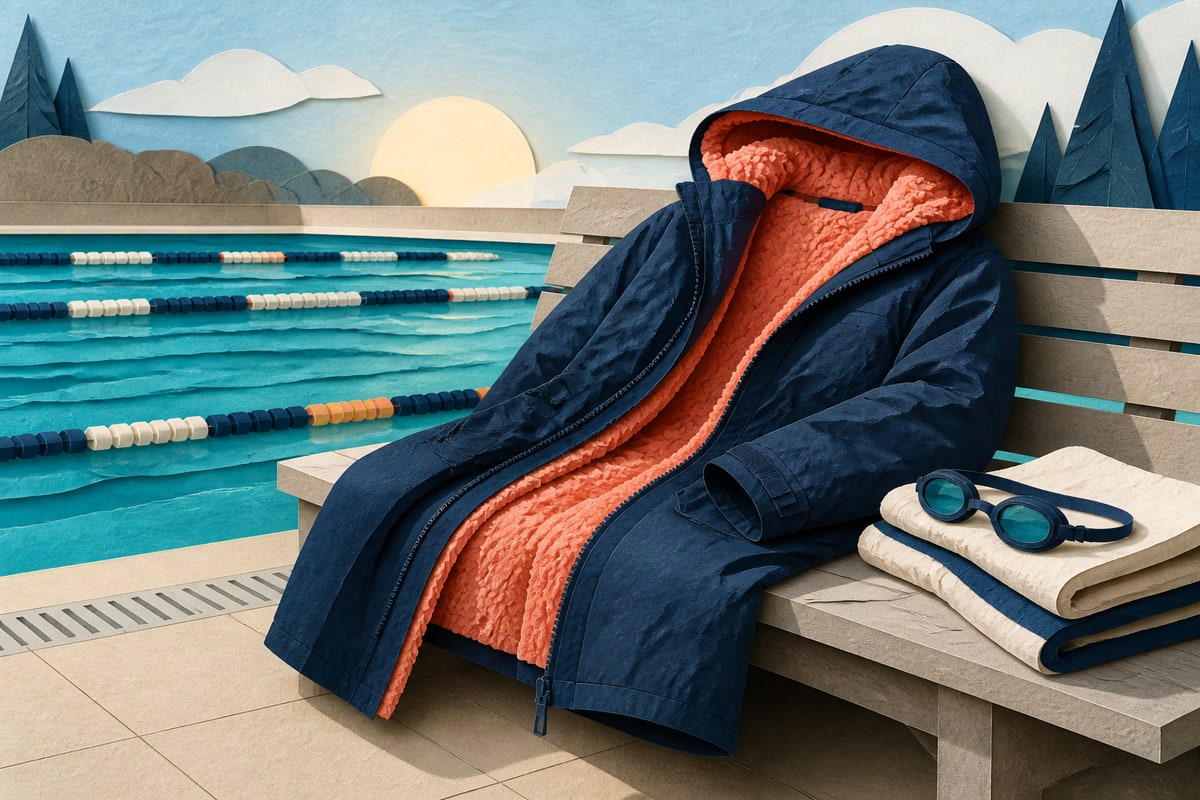
For most age-group and competitive swimmers, the best default is a hooded, fleece-lined parka with a water-resistant shell, a two-way zipper, and enough room for a wet suit plus a dry layer. “Water-resistant” is not the same as waterproof, and a parka is not a substitute for a rain shell in heavy weather.
Quick answer
Choose by use and fit before brand.
| Swimmer or setting | What to look for | Main check |
|---|---|---|
| Long outdoor meet | Longer lined parka with hood and weather-resistant shell | Can the swimmer sit and walk comfortably? |
| Cold indoor deck | Mid- or long-length fleece-lined parka | Is it easy to pull on over a wet suit? |
| Growing age-group swimmer | Youth-specific or carefully measured unisex cut | Is there layering room without unsafe sleeve length? |
| Team order | Customizable team-parka format | Are decorated items returnable, and who approves the logo? |
| Occasional cool session | Simpler warm layer or robe may be enough | Will the parka be used often enough to justify the bulk? |
The parka should close without pulling across the shoulders, cover the swimmer’s core and upper legs, and leave the hands available. Oversizing for several years of growth can create sleeves that cover the hands, a hem that catches at the knees, and too much cold air moving inside the coat.
What to compare
Lining and warmth
Fleece is common because it feels warm against damp skin and dries more readily than a heavy cotton robe. Compare how much of the inside is lined, including the hood and sleeves, rather than assuming every “fleece-lined” model is identical.
A warmer lining is not automatically better. A swimmer moving between a hot indoor deck and a crowded hallway may prefer less bulk than a swimmer standing outside through several events.
Shell and weather resistance
The outer shell should handle splashes, light rain, and the normal wet-deck environment. Retailers frequently describe swim-parkas as water-resistant. That wording does not promise waterproof seams or protection in sustained rain.
Look for a shell that feels flexible enough to pack and move in. A stiff coat that stays in the car is less useful than a slightly simpler parka the swimmer will actually wear.
Length and coverage
Longer parkas protect more of the legs and help block drafts, but they take more room in the bag and can be awkward on a small swimmer. Check the garment measurements, not only the youth, adult, or unisex label.
Have the swimmer sit on a bench, walk up steps, and bend to reach a bag. The hem should not control the movement.
Zipper, hood, and pockets
A two-way zipper can make a long parka easier to sit in. A lined hood helps after the cap comes off. Pockets should be large enough for hands and a small dry item, but they should not become the permanent home for wet goggles, food wrappers, or meet credentials.
Check whether pocket closures are easy to operate with cold hands. Confirm that an inside pocket is actually protected before putting a phone or paper inside it.
How a swim parka should fit
Measure the swimmer in the clothing they will actually wear under the parka. For many meet swimmers, that means a suit plus a shirt, shorts, or warm-up layer—not a winter sweater stack.
Check five points:
- Shoulders: the swimmer can reach forward and overhead without the back pulling tight.
- Sleeves: cuffs reach the wrist without swallowing the hands.
- Closure: the zipper closes over a damp suit and normal dry layer without strain.
- Hem: the coat adds useful coverage without catching behind the knees.
- Hood: the hood fits over wet hair without blocking side vision.
Unisex sizing can work well, but it does not remove the need to measure. Youth and adult charts may overlap while using different proportions. If the swimmer falls between sizes, compare garment measurements and the return policy instead of automatically buying the larger one.
Parka options worth comparing
Parka inventories change quickly, so use these as examples rather than a permanent ranking.
Value-oriented fleece-lined team parkas
Sporti’s Comfort Fleece-Lined Swim Parka shows what the standard team-parka format offers: a warm lining, outer shell, hood, pockets, and a long cut. Consider it when price and team-color availability matter, then verify the current fabric, measurements, and seller before ordering.
Best for: families looking for the core parka functions without assuming they need the most expensive model.
Structured team parkas
Arena’s Team Parka offers a more structured team-coat option. Compare its current cut, lining, pocket layout, and size chart with a value model instead of assuming the logo guarantees a warmer or better-fitting coat.
Best for: swimmers who want a familiar team style and can try or return the exact size.
Youth-specific listings
A youth-specific option can reduce the proportion problems that come with sizing down an adult or unisex coat. The label alone is not proof of fit; compare chest, sleeve, and garment-length measurements.
Best for: smaller swimmers whose hands or knees disappear inside adult cuts.
Availability and seller details change quickly. Check the exact coat, size chart, and return terms rather than assuming every listing shows the same model.
When a swim parka is worth buying
A parka earns its space when the swimmer regularly faces cold outdoor practice, long gaps between races, poorly heated facilities, or walks between a pool and another team area. It is especially useful when the swimmer repeatedly puts a warm layer over a wet suit.
It may be unnecessary for short practices in a warm indoor pool, swimmers who change immediately, or families already served by a robe and warm-up clothing. Start with the swim-meet packing checklist and identify the actual cold part of the day before adding another large item.
Meet-day packing and care
Parkas are bulky. Put the coat where the swimmer can reach it without emptying the main bag, and keep the lining away from loose food and leaking bottles. The swim-bag guide explains why dry layers and wet equipment work better in separate zones.
After use, open the zipper and hang the parka so the lining can dry. Do not leave it crumpled around a wet suit in a closed bag. Follow the exact care label; shell coatings, decoration, and lining materials may require different washing and drying methods.
For the rest of the day, the first swim meet guide explains warm-up, heats, lanes, and coach check-ins. Pair the parka decision with proven race equipment from the competition-goggle guide and the tech-suit guide rather than making race morning the first full-gear test.
Frequently asked questions
Is a swim parka waterproof?
Usually not. Many swim parkas use a water-resistant shell intended for splashes, damp conditions, and light weather. Check the exact product language; do not assume sealed seams or sustained-rain protection.
Is a swim parka better than a swim robe?
A parka usually offers more structured coverage, weather resistance, pockets, and outdoor usefulness. A robe may be simpler, softer, and easier to wash. The better choice depends on where the swimmer waits and how often the layer must go over a wet suit.
Should a swim parka be oversized?
It needs layering room, not uncontrolled extra length. Oversized sleeves and hems can interfere with hands, walking, and stairs. Use garment measurements and try the normal under-layers before deciding.
Can a swimmer wear a parka over a wet swimsuit?
Yes—that is a primary use. Let the parka dry fully afterward and keep its damp lining away from dry clothes, paper, and electronics.
How often should a swim parka be washed?
Follow the garment’s care label and wash it when needed for odor, residue, or visible soil. Drying it promptly after every wet use can reduce how often it needs a full wash.
Bottom line
The best swim parka is the one that fits over the swimmer’s real meet clothing, adds enough warmth for the facility, and still lets them sit, walk, and use their hands. Compare lining, shell, length, zipper, hood, pockets, and exact garment measurements. A warm coat that fits correctly is more useful than a prestigious model bought several sizes too large.
A note from Nikki
What I looked at
I compared parka designs by warmth, wet-suit coverage, fit, storage, weather resistance, and care.
What can vary
I have not personally tested every parka listed. Fit, materials, model names, and availability change, so confirm the current size chart, care label, weather-resistance claim, and return terms.