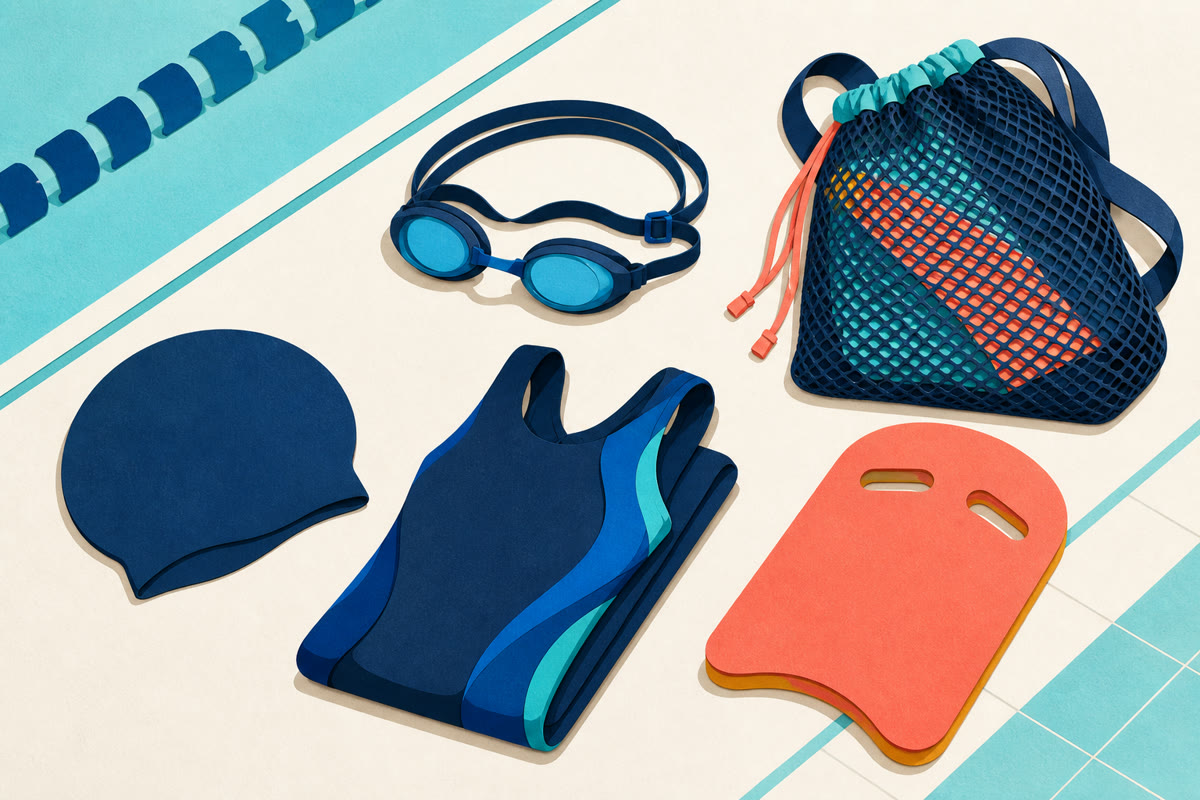
The best swim bag depends on its job. A daily training bag needs fast deck access and a place for damp gear. A travel-meet bag needs organization, comfortable straps, and enough room for several sessions. A mesh bag is excellent for fins and kickboards but a poor place for dry clothes and electronics.
Quick answer
Most competitive swimmers benefit from two bags:
- a structured backpack for personal gear, clothing, food, and small items;
- a ventilated mesh bag for wet training equipment.
Trying to make one bag do both jobs often leaves dry clothes damp and deck gear buried.
What to compare
| Feature | Why it matters | Common mistake |
|---|---|---|
| Wet-dry separation | Keeps towels and clothes away from suits and caps | Assuming a small pocket is waterproof |
| Ventilation | Helps damp gear dry between sessions | Sealing wet gear in the main compartment |
| Opening shape | Makes goggles and caps easier to reach | Choosing a deep bag with one narrow opening |
| Stable base | Keeps the bag upright on a wet deck | Overpacking a soft sack |
| Strap comfort | Matters during travel and long walks | Judging only by liter capacity |
| Identification | Prevents lookalike bags from disappearing | Relying on color alone |
Bag types
Structured swim backpack
A structured backpack is the best default for practice and meets. It can organize caps, goggles, credentials, clothing, towels, food, and a small personal-care kit while leaving both hands free.
Best for: age-group swimmers, high-school teams, masters swimmers, and meet travel.
Mesh equipment bag
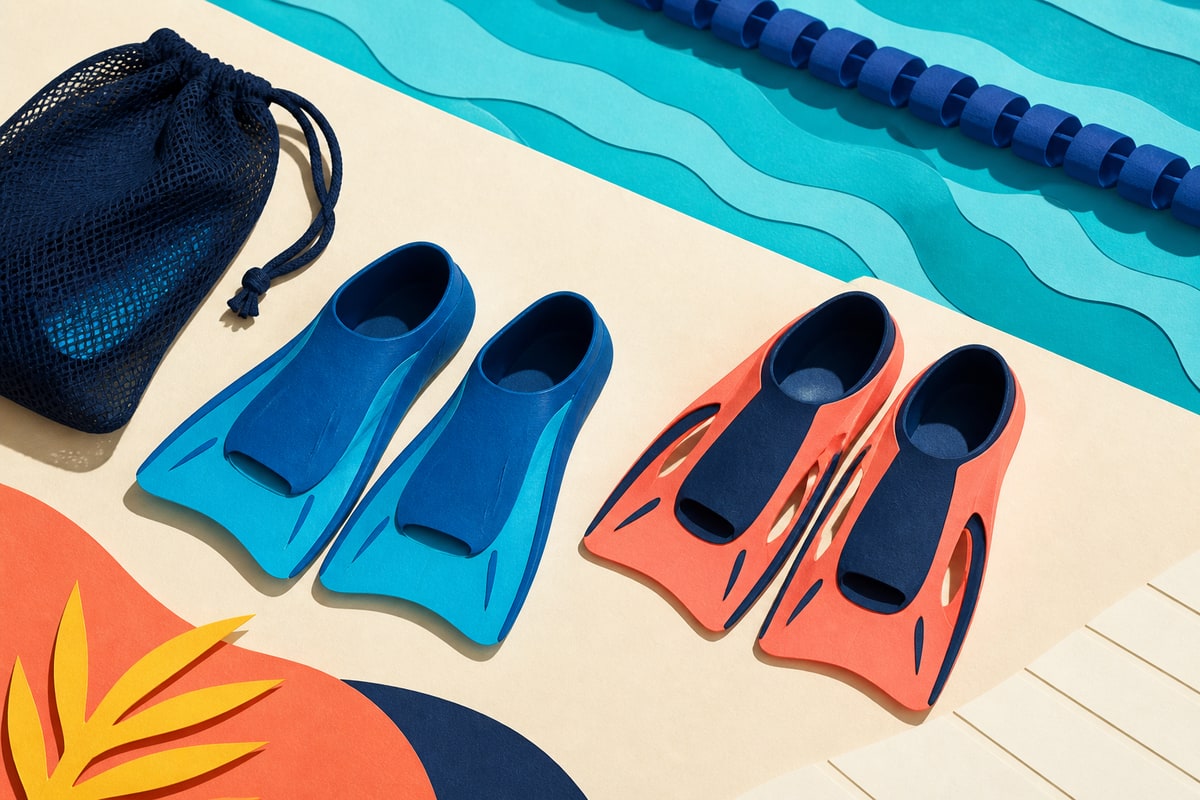
A mesh bag drains and ventilates. It is the right tool for fins, paddles, snorkels, pull buoys, and kickboards.
Best for: equipment-heavy practices and keeping wet deck gear out of the main backpack.
Duffel or tote
A duffel offers a wide opening and can be easy to pack, but it often has weaker internal organization and puts the weight on one side.
Best for: swimmers who drive directly to practice or need a secondary clothing bag.
Models worth comparing
Speedo Teamster family
The Teamster is a familiar structured backpack with a main compartment and several storage areas. It shows what this bag type can offer for organization and carrying comfort.
Best for: one primary bag across practice and meets.
Arena Spiky family
Arena’s Spiky backpack line is worth comparing when a swimmer carries more gear or wants a tall structured format.
Best for: multi-session meets and swimmers who like divided storage.
TYR Big Mesh Mummy
This is a mesh equipment backpack, not a substitute for a dry-gear bag. Its value is ventilation and quick access to bulky training tools.
Best for: fins, paddles, snorkels, kickboards, and wet deck equipment.
The training-fin guide explains how blade, heel, and foot-pocket choices change what belongs in that mesh bag.
Build a meet-ready layout
Use the top or front pocket for two proven pairs of goggles and spare caps. Put dry clothing and the post-session towel in the protected main area. Keep a small labeled pouch for credentials, medication handled according to personal needs, and items that should never roll loose.
The complete meet packing checklist turns that layout into a repeatable system. If a bulky warm layer is part of that system, the swim-parka guide explains how length, lining, and fit affect bag space and meet-day use.
For race gear, review the competition goggle guide and tech-suit guide. Those smaller decisions determine which bag compartments matter.
Bottom line
Choose by workflow, not by the biggest capacity number. A structured backpack plus a simple mesh equipment bag is often the most functional combination, and labeling both is more useful than chasing a limited-edition color.
A note from Nikki
What I looked at
I compared common swim-bag designs by wet-dry separation, ventilation, deck access, carrying comfort, and the job each bag needs to do.
What can vary
I have not personally tested every bag listed. Capacities and model names change, so confirm current dimensions, materials, and return terms.