A useful kicking drill has one job. It might teach body line, hip-driven motion, relaxed ankles, balance, timing, or underwater control. A long kick set with no technical focus is mostly a test of patience.
Fins can support several of these drills, but blade length and fit change the movement. Use the training-fin guide when the set calls for fins rather than treating any pair as interchangeable.
Quick answer
Use short repeats, plenty of rest, and one cue at a time. Then swim normal stroke immediately afterward and carry that cue into the whole movement.
| Drill | Main job | Simple cue |
|---|---|---|
| Streamline kick | Body line | Make one narrow shape |
| Side kick | Balance and hip connection | Stack shoulders and hips |
| Six-kick switch | Rotation timing | Rotate as one unit |
| Vertical kick | Direction of force | Kick both ways |
| Tombstone kick | Sustained force | Stay tall without stiff ankles |
| Underwater dolphin progression | Wave timing and line | Move through the body, not just knees |
1. Streamline kick
Kick on the front with arms in streamline, using a snorkel when appropriate and supervised. Keep the head neutral and reduce side-to-side movement.
Try: 6 × 25 easy-to-moderate, resting enough to keep the line clean.
Watch for: lifting the head, bicycle motion, or bending at the waist.
2. Side kick
Kick on one side with the lower arm extended and the upper arm at the side. Keep the body long and the head quiet.
Try: 4 × 25 per side.
Watch for: rolling onto the back, crossing the feet, or holding the legs rigid.
Side kicking makes it easier to feel how the hips and feet balance the whole body.
3. Six-kick switch
Take six kicks on one side, rotate with one controlled stroke, and take six kicks on the other.
Try: 6 × 25 with a pause between lengths.
Watch for: leading the rotation with only the head or arm. The torso should rotate as one connected unit.
4. Vertical kick
In water deep enough for the swimmer and under appropriate supervision, stay upright and kick without using the hands for support.
Try: 6 rounds of 15–20 seconds with generous rest.
Watch for: large knee lifts, rigid ankles, and sinking that changes the movement into panic.
Vertical kicking can help a swimmer feel force on both directions of the flutter kick.
5. Tombstone kick
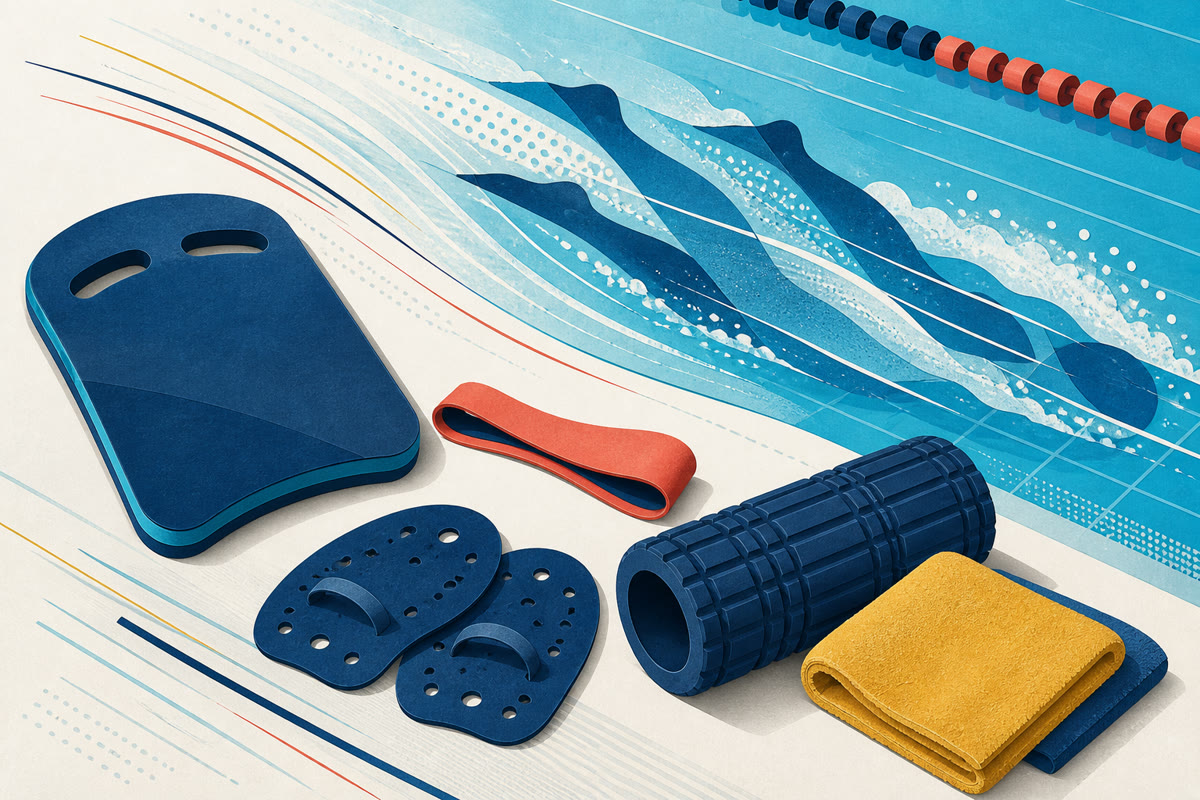
Hold a kickboard vertically so part of it creates resistance, then kick a short distance with controlled posture.
Try: 6 × 12.5 or 25 at controlled effort.
Watch for: excessive low-back arching and turning every repeat into an all-out struggle.
A board is a tool, not a requirement. If holding it worsens posture or shoulder comfort, use a different drill.
6. Underwater dolphin progression
Begin with body-dolphin movement at the surface, then progress to short, coach-directed underwater work. The movement should travel through the torso and hips rather than coming only from large knee bends.
Safety: Follow the facility and coach’s rules. Never practice underwater breath-holding alone or turn it into a contest.
A 20-minute kick set
- 4 × 25 streamline kick, easy and long
- 4 × 25 side kick, alternating sides
- 4 × 25 six-kick switch
- 6 × 15 seconds vertical kick with full recovery
- 4 × 25 normal freestyle carrying one kick cue
Adjust distance and rest to the swimmer. Quality should decline as little as possible.
Support it with dryland
Hip strength, trunk control, and ankle capacity can support a cleaner kick, but they do not replace practice in the water. The strength-training guide provides two simple dryland sessions that can fit around pool work.
Store boards and fins in a ventilated equipment bag; the swim bag guide explains why wet training tools should be separated from race gear. Before a meet, return to the packing checklist and leave bulky training equipment behind unless the coach asks for it.
Bottom line
Choose the drill that matches the problem, use one cue, and connect it back to full swimming. Better kicking is coordinated movement—not simply harder splashing.
A note from Nikki
What I looked at
I built each drill around one job, using U.S. Masters Swimming technique guidance and coaching-style progressions that connect the cue back to full stroke.
What can vary
Stroke mechanics, mobility, pain, and training goals vary. Underwater breath-holding should follow qualified coaching and facility safety rules; never practice it alone.